
what is a logistics professional?
As a logistics professional, you are responsible for managing goods. Various companies receive and dispatch goods or commodities, such as in the trade, manufacturing, or service sectors. For example, breweries, pharmaceutical companies, or online retailers. In these organisations, logisticians ensure smooth operations within warehouses or distribution centres. Companies in the transport sector, such as airports or train stations, as well as postal and parcel delivery services, also require logistics professionals. Working as part of a team, you ensure that processes with customers and suppliers run smoothly. Your duties also include health and safety, environmental efficiency, and process optimisation.
logistics professional jobsworking as a logistics professional.
Logistics staff are responsible for managing and shipping goods. In this versatile role, you ensure that the warehouse is adequately stocked with all necessary items and that all deadlines are met. You always have transport, orders, and deliveries under control.
your area of responsibility
How do all these packages and deliveries get from door to door? In the goods process, you will take on the following tasks:
-
Loading and unloading: When the goods arrive, you're ready with the forklift. Behind the wheel, you make sure all the packages are loaded and arrive at the correct location in the warehouse.
-
Sorting and repacking of parcels: All goods have their designated place in the warehouse. Especially with large deliveries, sorting and repacking can take a considerable amount of time.
-
Picking: You assemble new shipments according to specified orders and prepare them for dispatch.
-
Administrative tasks: Checking data on the computer, ticking off orders, and entering new orders are things you enjoy doing. These are all part of ensuring a smooth flow of goods.
- Process optimisation and troubleshooting: Has your team leader overlooked something or is a process not running as it should? You'll notice straight away and can resolve the issues yourself or discuss them with the person responsible. Innovative technologies offer a wide range of options in logistics in this regard the more interested you are, the better.
who are your colleagues?
In logistics, you always work as part of a team. You support each other and, together with other warehouse staff and the picking team, you ensure everything runs smoothly. You also collaborate with team and warehouse managers, especially when it comes to solving problems or when documents need to be signed.
types of logistics professionals.
The area is large, and logistics professionals are in demand. Your specific role largely depends on the company you work for. Of course, age, experience, and qualifications also play a significant part.
The main logistics companies operating are:
- logistics EBA
- logistics EFZ
- logistics assistant
- logistics staff
- warehouse operative
- forklift driver
- warehouse worker - order picking
- warehouse Worker - goods inward and outward
- loader / unloader
- operational staff
Planning and management tasks, on the other hand, are usually undertaken by:
- logistics manager
- logistics manager
- logistics professional, distribution, swiss federal certificate
- logistics specialist, swiss federal certificate
- logistics specialist
- logistics specialist, Federal Diploma of Vocational Education and Training (FET)
- logistics administrator
- group leader of logistics
- head of picking
- goods receiving manager
- supply planner
- logistics coordinator
- supply chain specialist

salary as a logistics professional.
The salary for logistics staff varies depending on qualifications, age, and region. Different industries also pay differently. In Switzerland, salaries in the pharmaceutical sector are generally the highest for logistics professionals. Of course, statutory night and weekend allowances are also included in your pay.
how much do I earn as a logistics professional in a permanent position?
-
with an EBA, the starting salary after apprenticeship is around 3,500 CHF and 3,800 CHF
-
with an EFZ qualification, it's approximately 3,750 CHF to 4,100 CHF
(Source: Recommendations of the Swiss Association for Vocational Training in Logistics).
-
on average, you earn between 50,500 and 78,000 CHF in Switzerland as a logistics professional
how much do I earn as a logistics professional per hour?
On average, you earn between 27 and 29 CHF per hour as a logistics professional.
which industry offers the highest earnings for a logistics professional?
- medicine / pharma
- industry
- food
- transport & traffic
- trade
What additional benefits do I receive as a logistics professional?
Depending on your employer, you may get various perks. These could include a free parking space, discounts at the canteen, or free snacks and drinks.
Would you like to find out how much you earn as a logistics professional? Enter your age, position, industry, and other details to get the most accurate estimate, and calculate your salary at salarium.ch.
education and further training as a logistics professional.
Would you like to become a logistics professional? In Switzerland, you have two different training options available. These are the two- and three-year apprenticeship programmes as a logistics professional:
-
logistics specialist EBA, the Swiss Federal Vocational Certificate for Logistics Specialists (2 years)
-
logistics specialist EFZ, the Swiss Federal Certificate of Competence for Logistics Specialists (3 years)
The training takes place at the company, at vocational school, and in inter-company courses. Managing goods and all related knowledge are the main components of both apprenticeships. During the three-year training, you will gain more in-depth specialist knowledge. You will also take on more responsibility during your apprenticeship and even more afterwards. The academic requirements are somewhat lower for the two-year apprenticeship. During your training as a logistics professional, you will also obtain your forklift licence as part of the programme.
To take on more complex tasks or leadership roles in logistics, there are various further training options available to you:
-
logistics provider BP
-
logistics provider HFP
-
logistics specialist BP
-
technician HF
- university of Applied Sciences degree in Economics
entry-level or career starters in logistics.
Because there is a significant shortage of skilled logistics professionals, the logistics sector also offers good opportunities for both career changers and newcomers. Logistics staff, whether with or without formal training or experience, are in high demand nowadays. Many new positions are being created, and logistics operations are being expanded. And the profession has a bright future: the trend continues towards digitalisation and the development of logistics centres.
The most important factors are physical fitness, German language skills, reliability, and a good dose of motivation. Usually, you start your first job at an hourly rate. Many companies offer the chance of a permanent position later, if you like the company and the work. It’s also possible to undertake part-time training courses alongside your job. Especially with Randstad, the temp training programme provides excellent opportunities to gain skills that will be useful throughout your career.

working as a logistics professional at brack.
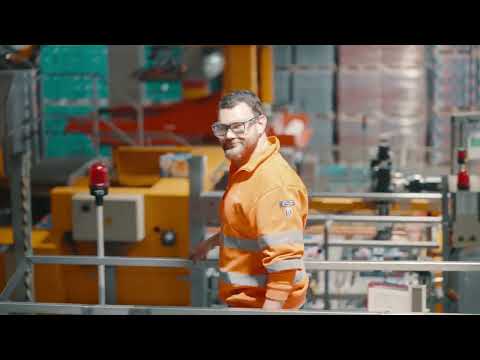
Discover the logistics and competence centre of the well-known online shop and watch the logistics team at work. Are you fascinated by the intersection of cutting-edge technology and online retail? This could soon be your new place of work.


«I really like the working atmosphere and the great colleagues at Competec. I also really enjoy working here.»
Jean-Marc Thüer, logistician EFZ piece goods

career opportunities and development potential as a logistics professional.
Do you already have extensive experience as a logistics professional? This is arguably one of the most important aspects in logistics. Those with several years of experience who consistently make a very good impression at work can quickly take on more responsibility or become team leaders in certain companies.
Similarly, after completing the logistics apprenticeship (EFZ), you have a range of further training options available that can help you move into related fields or leadership roles. These opportunities include various courses at vocational and technical colleges, professional examinations, and even university degrees at a fachhochschule. Further training definitely enhances your career prospects. As a dispatcher, qualified supply chain manager, or transport and logistics operations manager, you’ll take on greater responsibilities and broader areas of work.
how do you develop yourself further as a logistics professional?
Your development potential in logistics is particularly high if you are interested in process optimisation and trends in the digital sphere. Currently, barcode scanners and associated databases are in use. Going further, RFID technologies are being implemented. These enable real-time tracking of product data such as temperature or location, for example during transportation to the customer. Logistics is one of the sectors that has undergone significant change in recent years. In the future, logistics processes are expected to become even more fully automated. Larger companies are already using warehouse robots, cleaning robots, or drones, and are continually exploring additional applications and technologies.
Would you like to improve your career prospects? Be sure to also take a look at the tips and tricks for applications.

competencies as a logistics professional.
Would you like to apply for a logistics professional role? The following qualities will help you:
✓ practical understanding
✓ good command of german
✓ craft and organisational skills
✓ reliability, independence, and a sense of responsibility
✓ physical fitness and resilience
✓ team player
✓ good rapport with customers and suppliers
✓ depending on the company: willingness to work shifts
✓ interest in digital technologies
advantages of working as a logistics professional at randstad.
There are many good reasons to work as a logistics professional at Randstad:
✓ exciting jobs with well-known companies
✓ a reliable point of contact whenever you need one, personal advice matters
✓ attractive employment conditions and good social benefits
✓ further education courses and personal development opportunities
✓ clear information in the myRandstad app
✓ you have a fixed-term contract? Often, there’s a chance it could be made permanent
Follow-up contract. Many popular companies also recruit their employees directly through Randstad.
✓ many companies offer you discounts on food and free parking
your training budget as a logistics professional at randstad.
If you work as a logistics professional for Randstad, you have access to further training courses. As part of the Temp Training programme, you can attend various training sessions. Your dedicated Randstad consultant will assist you with choosing and registering for these courses. For example, you could obtain your forklift licence, improve your German language skills, or learn more about process optimisation.
application tips for logistics professionals at randstad.
Have you found your dream job as a logistics professional? It’s not just qualifications and certificates that determine the success of your applications. Careful, error-free, and personalised documents will definitely help you in your job search. Here are a few useful tips to optimise your chances:
-
1. find a position as a logistics professional
Search Randstad's job listings for logistics roles. If you can't find a position that suits you perfectly, you can create your Randstad profile or get in touch with us personally, without any obligation. We look forward to meeting you, logistics staff are always in demand.
-
2. applying as a logistics professional
The logistics job advert continues: apply online, give us a call, or send us an email.
Make sure your documents are complete:
✓ CV with photo
✓ work references & diplomasYou don't have a CV yet, or only an outdated version? Create a new layout using a free online template.
do you need a new application photo?
If you want to do it yourself: make sure you have a neutral background and choose a simple top, such as a plain shirt or a neutral blouse. Using portrait mode, you can already create high-quality photos with your smartphone. It’s best to stand about one metre in front of your chosen background for example, one metre away from a wall. This way, the sharpness effect on your face comes out perfectly. Ask a friend to take the photo for you.
-
3. preparing for a job interview as a logistics professional
A good preparation will help you stay calm during the interview. Here are some tips for your job interview that will help you land a position in logistics.
frequently asked questions.
Discover the essentials in a nutshell and kickstart your journey in logistics today.
-
what does a logistics professional do?
In logistics, you manage goods or commodities. You handle receiving, recording, and transportation, ensuring that all processes in the warehouse or goods depot run smoothly. Logistics professionals work not only in traditional warehouses but also in transportation or distribution centres. Discover a variety of exciting logistics jobs.
-
how much do I earn as a logistics professional?
In logistics, you can earn between 3,800 and 6,000 CHF gross per month with an EFZ. The exact amount you earn depends on your age, training, responsibilities, and your future employer. Find out more here.
-
do you need experience to become a logistics professional?
Not necessarily. The more practical experience you have, the better you are generally paid. Even during your apprenticeship, you gain valuable work experience. If you have no experience at all, the best way to get started is as a temporary worker. Often, this can lead to a permanent position if the company is satisfied with your work and you enjoy the job. Find logistics jobs here.
-
what requirements do I need to meet to become a logistics professional?
Are you fit, resilient, and enjoy a varied job? Logistics could be the right fit for you if you have good organisational skills and prefer to get stuck in right away. It's also beneficial if you enjoy working with suppliers, customers, and as part of a team. An interest in new technologies, which are becoming increasingly important in this industry, is a further plus. Find out more.
-
how do I apply for a vacant position as a logistics professional?
Applying is very straightforward with Randstad: create your Randstad profile and search for available positions in your area. Once you find a role that interests you, simply send us your CV and cover letter. Need some help with your CV or cover letter? Check out our application tips for logistics professionals.